TL;DR: The best time for a Tanzania safari is June to October for dry season game viewing and Great Migration river crossings. January and February are ideal for wildebeest calving in the southern Serengeti. Green season (November to May) brings lower prices, fewer crowds, and lush landscapes. Tanzania works year-round. Pick your priority and let that guide your dates.
We have guided safaris across Tanzania for over 10 years, and the question we hear most is always the same: when should I go?
The honest answer is that there is no single best time for a Tanzania safari. Every month offers something worth seeing. The dry season delivers iconic game drives and river crossings. The green season delivers value, privacy, and baby animals. The shoulder months deliver a mix of both without the peak-season prices or crowds.
What matters more than the calendar is what you want from your trip. Are you chasing the Great Migration? Trying to keep costs down? Visiting a specific park? Traveling with kids during school holidays? Each of those priorities points to a different window.
This guide breaks down every month, every major park, and every season so you can pick the dates that fit your trip. If you want help narrowing it down, send us your dates and priorities and we will tell you exactly what to expect.
What Is the Best Time for a Tanzania Safari?
The best time for a Tanzania safari is the dry season from June to October. Wildlife concentrates around rivers and waterholes, the grass is short and visibility is high, and the Great Migration river crossings happen in the northern Serengeti. This is when most first-time visitors travel.
But “best” depends on your priorities.
If you want the Great Migration calving season, January and February in the southern Serengeti are better. If you want lower prices and fewer safari vehicles, November through May (green season) gives you 30 to 50% savings on accommodation compared to peak months. If you are visiting Mikumi National Park from Dar es Salaam by SGR train, the dry season from June to October is strongest, but January and February also offer excellent visibility on the Mkata Floodplain.
Tanzania is a year-round safari destination. The question is not whether to go, but what you will see when you arrive.
Month-by-Month Tanzania Safari Calendar
Each month below includes what you will see, the weather to expect, and how busy the parks are. Use this as a reference when picking your travel dates.
January
Wildlife: Wildebeest herds gather on the southern Serengeti short-grass plains. Calving begins late in the month. Predator activity increases as lions and cheetahs target newborns. Excellent Big Five viewing across Ngorongoro Crater and Tarangire.
Weather: Warm and mostly dry between the two rainy seasons. Afternoon showers possible but brief.
Crowds: Moderate. Popular with European travelers during the winter holiday period.
Price tier: Shoulder to high season, depending on the lodge.
February
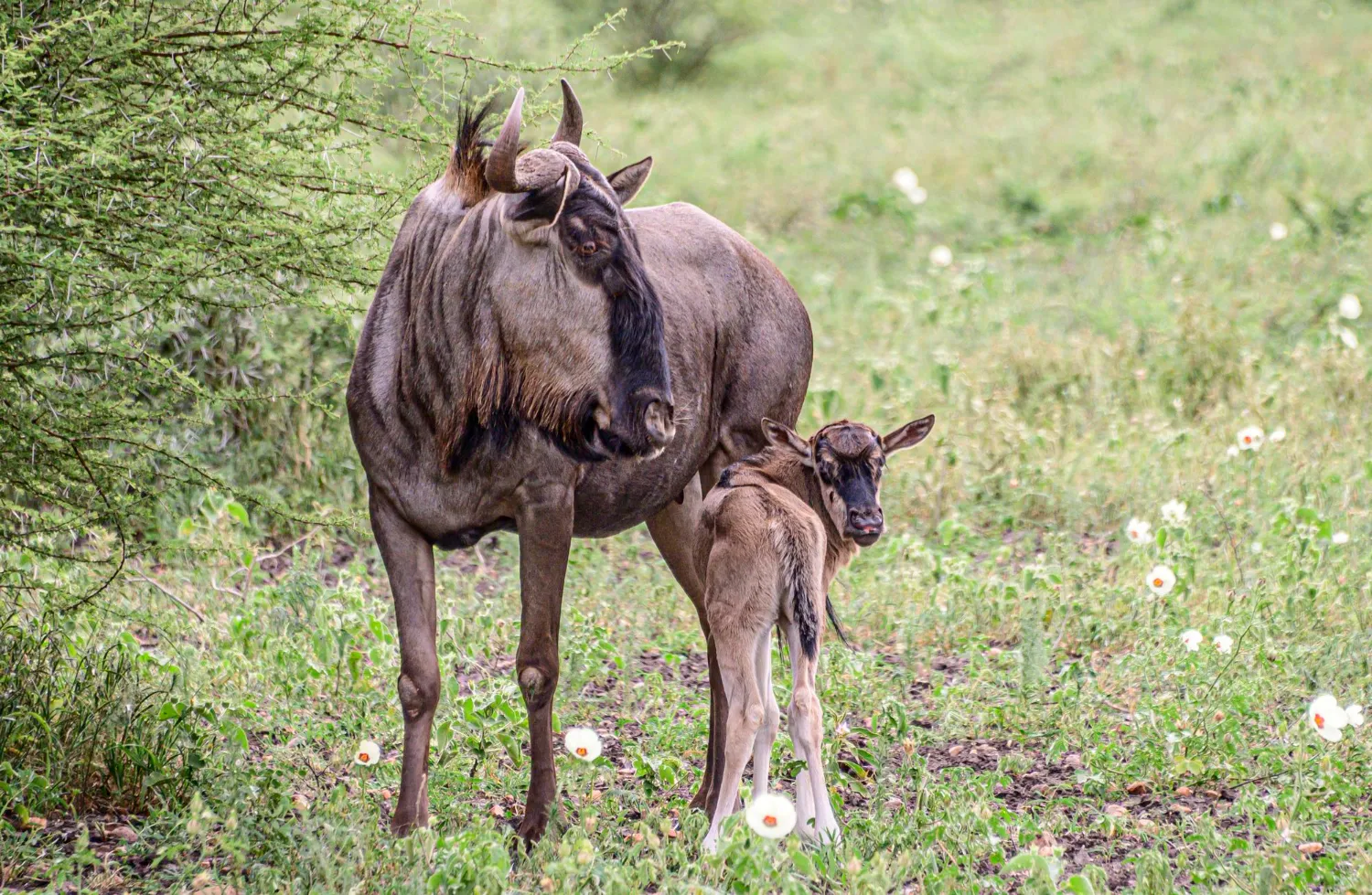
Wildlife: Peak calving season. Up to 8,000 wildebeest calves are born daily in the southern Serengeti during late January and February. Predator sightings are some of the best of the year. Flamingos gather on the Ngorongoro Crater’s Lake Magadi.
Weather: Warm with occasional rain. Green landscapes and dramatic skies make this a strong month for photography.
Crowds: Low to moderate. One of the most underrated months for a Tanzania safari.
Price tier: Shoulder season. Good value for what you see.
March
Wildlife: The southern Serengeti herds start drifting northwest. Birdwatching improves as migratory species arrive. Parks remain green and productive. Mikumi and Ruaha still offer solid game viewing early in the month.
Weather: The long rains begin. Rain falls in bursts, usually in the afternoon, not all day. Some remote roads become difficult.
Crowds: Low. Lodges start offering green season rates.
Price tier: Green season. Expect 30 to 50% lower prices compared to July and August.
April
Wildlife: Rain pushes animals into denser vegetation, making sightings harder. Some parks (especially Katavi and western circuit) become difficult to access. The Serengeti remains viable but less predictable. Mikumi’s Mkata Floodplain can flood in heavy rain years.
Weather: The wettest month. Heavy afternoon storms are common. Some lodges close, especially in the south and west.
Crowds: Very low. The quietest month in Tanzanian tourism.
Price tier: Lowest prices of the year. Best month for budget travelers willing to accept weather risk.
May
Wildlife: Rain continues but begins tapering. The herds move through the central Serengeti. Birdlife peaks. Lush green landscapes across every park.
Weather: Transitional. Rains ease in the second half. Roads improve.
Crowds: Low. Some premium lodges reopen late May.
Price tier: Green season, rising toward shoulder rates by month end.
June
Wildlife: The dry season begins. Grass dries out and animals concentrate near water. The Great Migration herds reach the western Serengeti and attempt Grumeti River crossings. In our experience, June is when Mikumi’s game viewing shifts from good to excellent as the floodplain dries and wildlife becomes easy to spot from the vehicle.
Weather: Cool and dry. Mornings can be cold on the northern circuit (bring layers). No rain expected.
Crowds: Rising. High season begins but is not yet at peak levels. June offers a sweet spot of peak-season wildlife with pre-peak pricing.
Price tier: High season, but the first two weeks often carry shoulder pricing.
July
Wildlife: Peak safari season. Migration herds push toward the northern Serengeti and the Mara River. Predator density is high across the entire northern circuit. Tarangire sees its largest elephant herds as animals move to the Tarangire River. Mikumi and Ruaha are at their driest and most productive.
Weather: Cool, dry, clear. The best weather of the year for safari.
Crowds: High. Northern Serengeti and Ngorongoro Crater are busy. Southern parks like Mikumi and Ruaha remain quieter.
Price tier: Peak season. Highest prices, especially at premium lodges.
August
Wildlife: The Great Migration river crossings continue at the Mara River. This is what most people picture when they think of a Tanzania safari: wildebeest leaping into crocodile-filled water. Big Five sightings are reliable across the northern circuit. Southern parks remain excellent.
Weather: Dry and cool. Similar to July.
Crowds: The busiest month of the year. Book well in advance, especially for Serengeti and Ngorongoro.
Price tier: Peak season. Premium rates everywhere.
September
Wildlife: Migration river crossings continue in the northern Serengeti. Some herds begin crossing into Kenya’s Masai Mara. Wildlife viewing remains strong across all parks. In Mikumi, we regularly see large lion prides on the floodplain this month as the dry conditions push prey into open ground.
Weather: Warming up. Still dry. Haze can build late in the month.
Crowds: High but beginning to taper. Slightly easier to book than July and August.
Price tier: Peak season, with some lodges offering late-season discounts toward month end.
October
Wildlife: The first rains build. Animals are still concentrated at water sources. The Serengeti herds start their southward return. Tarangire and Lake Manyara remain productive. Mikumi is excellent through mid-October.
Weather: Transitional. Thunderclouds build in the afternoons. Light showers possible.
Crowds: Dropping. A good month for travelers who want dry-season wildlife without peak-season crowds.
Price tier: Shoulder season. Prices start falling.
November
Wildlife: The short rains arrive and the landscape transforms. Migratory birds return, making this one of the best months for birdwatching across Tanzania. Serengeti herds return to the central and southern plains. Green season baby animals start appearing.
Weather: Short rains. Showers are usually brief and in the afternoon. Roads remain passable.
Crowds: Low. One of the most underrated months for a Tanzania safari.
Price tier: Shoulder to green season. Strong value.
December
Wildlife: Calving preparations begin in the southern Serengeti. Bird diversity peaks in Tarangire and Nyerere. Ngorongoro Crater offers year-round Big Five viewing. Mikumi stays productive.
Weather: Short rains continue through mid-December, then ease.
Crowds: Low early December, rising around Christmas and New Year.
Price tier: Green season early, shoulder/peak during Christmas week.
When Is the Best Time for Each Tanzania National Park?
The best time to visit each park depends on its geography, water sources, and the type of wildlife you want to see. Northern circuit parks work well year-round. Southern circuit parks are best from June to November.
Serengeti National Park
Best months: June to October for the Great Migration and predator viewing. January to February for calving in the southern plains.
The Serengeti works year-round because of its size and habitat diversity. Where you stay within the park matters as much as when you visit. The southern plains suit calving season. The western corridor suits the Grumeti crossings in June. The northern sector suits the Mara River crossings from July to September. We build our 5-day Serengeti package and 9-day migration safari around these patterns.
Ngorongoro Crater
Best months: Year-round. The crater floor holds water permanently, so wildlife stays resident.
June to October offers the clearest skies and easiest spotting. January to March brings green landscapes, flamingos, and fewer vehicles on the crater floor. The Ngorongoro vehicle descent fee is $295 per vehicle, so timing a visit with good conditions matters for value.
Tarangire National Park
Best months: June to October for the dry season elephant concentrations. Tarangire’s river is one of the few permanent water sources in the region, so animals flood in during the dry months.
November to May is quieter but wetter. The elephants disperse and birdlife takes over.
Lake Manyara National Park
Best months: June to September for tree-climbing lions. November to May for flamingos and birdwatching.
Manyara is compact and works well as a half-day stop on a northern circuit trip.
Mikumi National Park
Best months: June to October for the strongest game viewing. January to February also works well for visibility.
We run safaris in Mikumi year-round. The Mkata Floodplain is the center of activity, and during the dry months the short grass makes spotting elephants, lions, giraffes, and buffalo straightforward from the vehicle. The 2-day Mikumi safari by SGR train is our most popular short trip, and it works best from June through October when game drives are most productive.
Ruaha National Park
Best months: June to November. Ruaha closes some lodges during the heavy rains (March to May). The dry season concentrates wildlife along the Great Ruaha River, creating some of the best predator viewing in East Africa.
Nyerere National Park (Selous)
Best months: June to October. Boat safaris on the Rufiji River are a highlight. The park is remote and lodges close during the worst of the rains. Some operators (including us) access Nyerere from Dar es Salaam for 3-day Nyerere packages during the dry season.
When Is the Best Time to See the Great Migration?
The best time to see the Great Migration in Tanzania is June to September for the Mara River crossings and January to February for the calving season. Both are spectacular, but they look very different.
The Great Migration is not a single event. It is a continuous, year-round cycle driven by rainfall. Roughly 1.5 million wildebeest, 300,000 zebra, and 200,000 gazelle move across the Serengeti ecosystem in a clockwise loop. Where the herds are depends on the month:
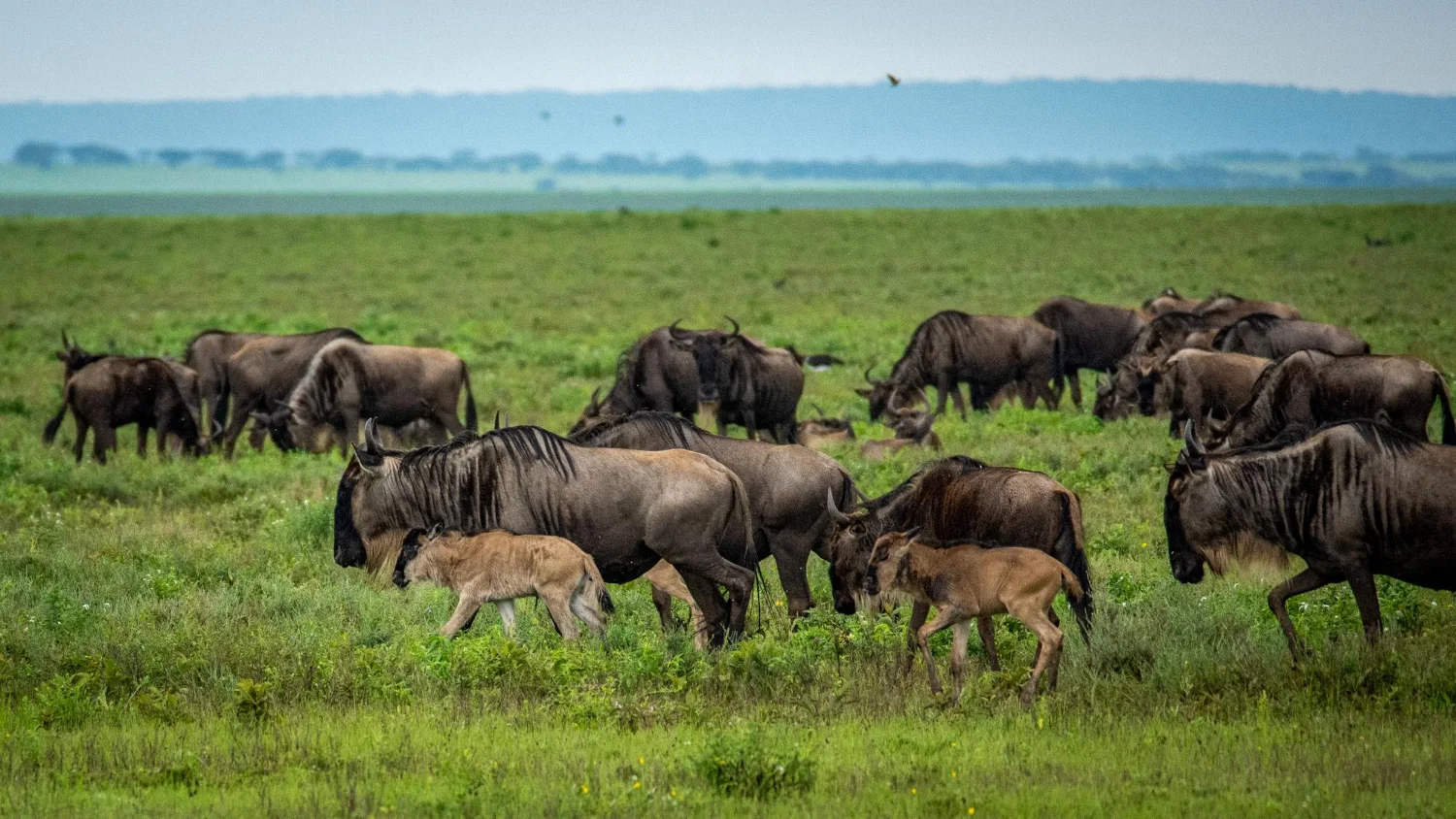
January to March: Southern Serengeti. Calving season. Thousands of calves born daily. Lions, cheetahs, and hyenas hunt actively.
April to May: Central Serengeti. Herds drift northward through the Seronera area. Rains make some roads challenging.
June: Western Serengeti. Grumeti River crossings begin. Crocodile ambushes. Dramatic and less crowded than the Mara crossings.
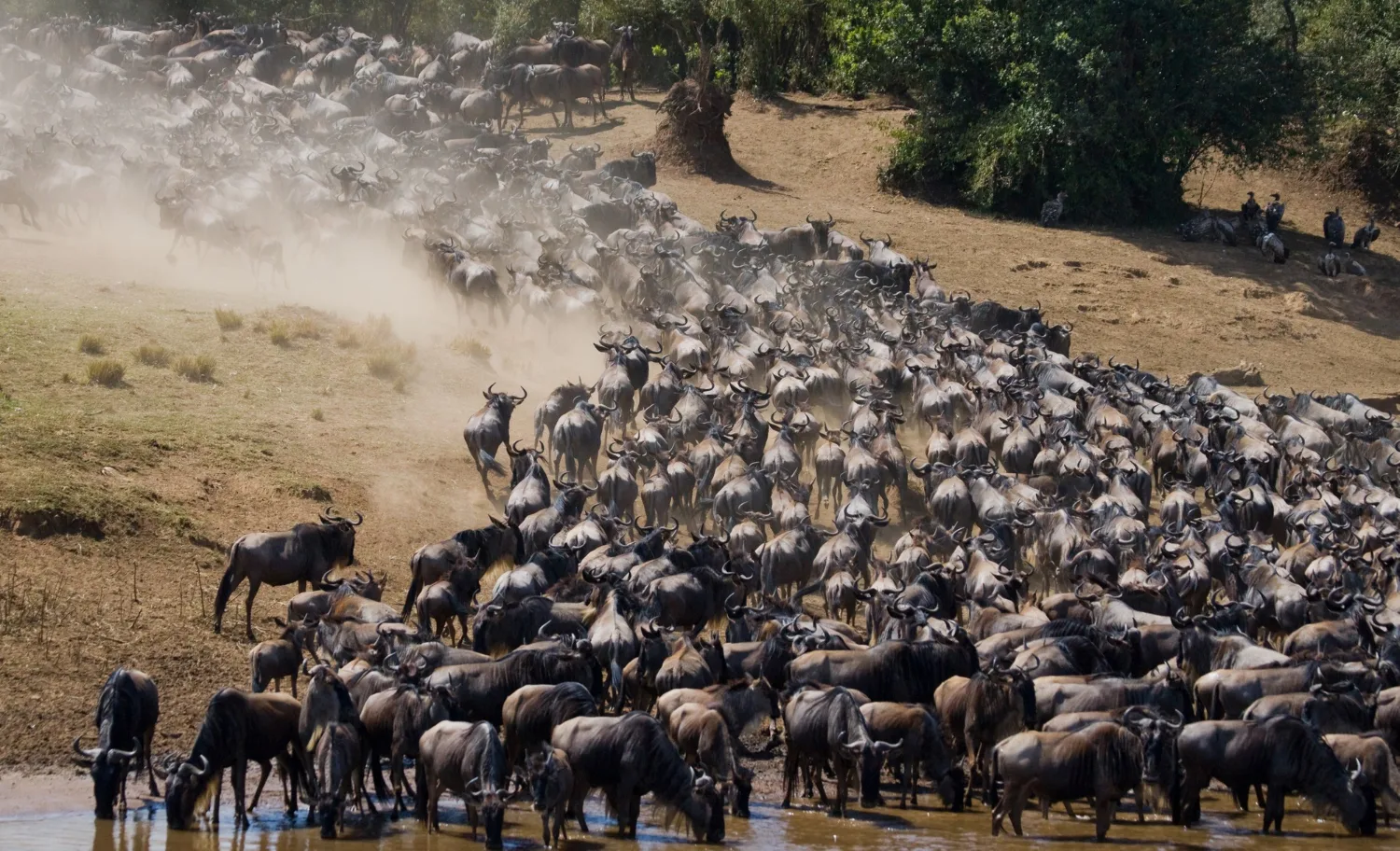
July to September: Northern Serengeti. The famous Mara River crossings. This is the scene most people associate with the migration. Herds gather on the riverbank, hesitate, then plunge into crocodile-filled water. Crossings are unpredictable. Some days nothing happens. Other days the herds cross four times.
October to December: Herds return southward through the eastern Serengeti, following the rains back toward the calving grounds.
We time our 9-day migration safari to the July-September window for the river crossings. If you prefer the calving season, our 5-day Serengeti package in January or February covers the southern plains.
Is Green Season Worth It for a Tanzania Safari?
Yes. Green season (November to May) is one of the best-kept advantages in Tanzanian tourism. You trade peak-season certainty for lower prices, fewer vehicles, greener landscapes, and wildlife events that most travelers never see.
Here is what green season actually looks like:
Prices drop significantly. Accommodation rates fall 30 to 50% below peak season. The same lodge that charges $800 per night in August might charge $400 in March. Park fees stay the same, but everything else gets cheaper.
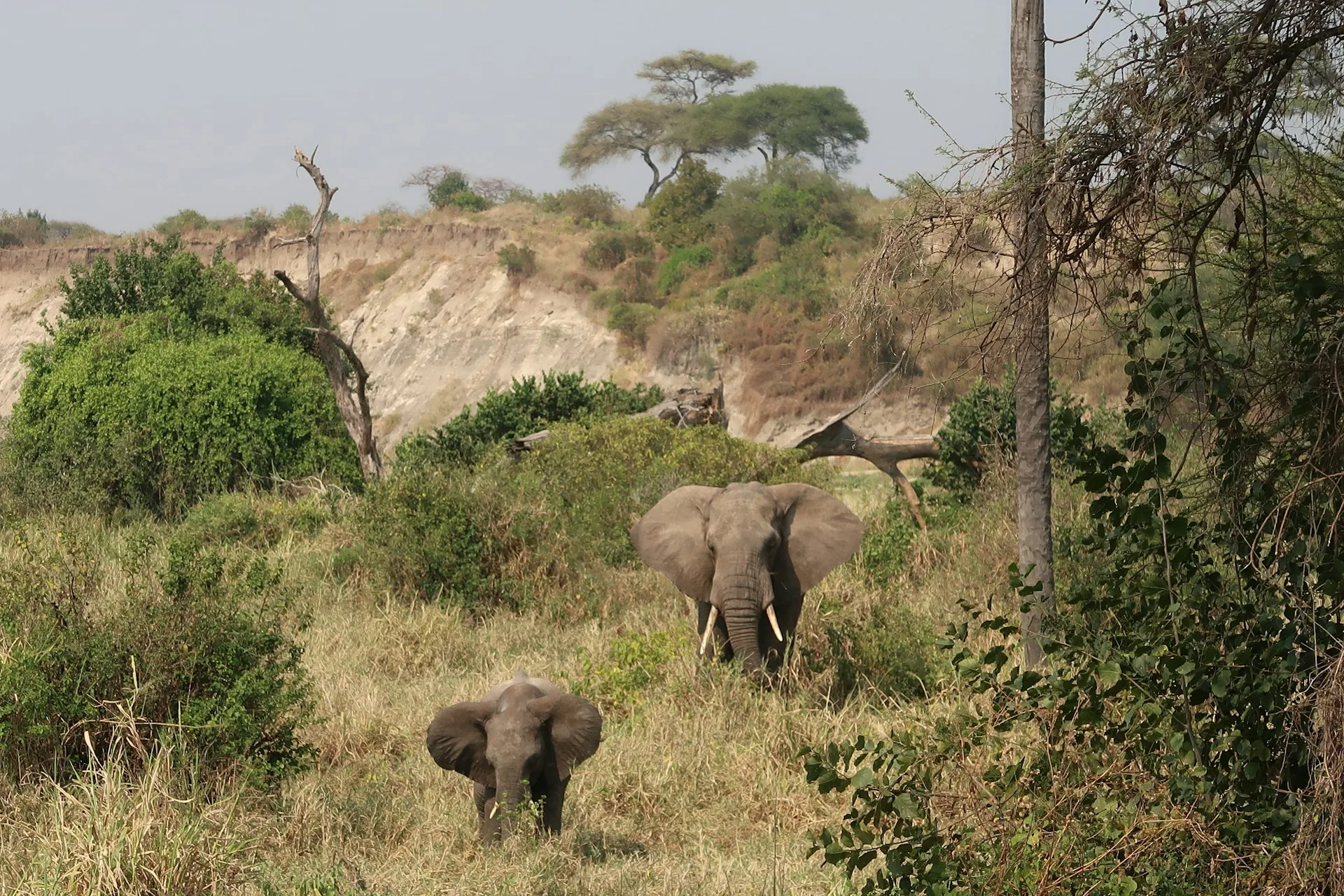
Fewer safari vehicles. In peak season, popular Serengeti crossings and Ngorongoro viewpoints can have 20+ vehicles. In green season, you might share a sighting with two or three. For photographers, the difference is dramatic.
Baby animals everywhere. Calving season (January to February) produces thousands of newborn wildebeest, zebra, and gazelle. Predators hunt actively. The circle-of-life sightings are raw and real.
Birdwatching peaks. Over 500 migratory species arrive between November and April. If you care about birds, green season is not a compromise. It is the primary season.
The rain is not what you think. Green season rain in Tanzania is not all-day drizzle. It comes in short, intense afternoon bursts. Mornings are usually clear and perfect for game drives. You lose maybe an hour of the day. The trade-off is worth it for most travelers.
Green season works best on the northern circuit (Serengeti, Ngorongoro, Tarangire) and for Zanzibar beach extensions where the rain is brief and the beaches remain beautiful. Southern circuit parks (Mikumi, Ruaha, Nyerere) are trickier in the heaviest months (March to May) due to road conditions.
How Much Does a Tanzania Safari Cost by Season?
A Tanzania safari in 2026 typically costs between $250 and $1,500 per person per day, depending on lodge tier, group size, and season. The season you choose affects price more than almost any other variable.
Peak season (July to October): Highest prices. Expect $450 to $800 per person per day for a mid-range private safari. Premium lodges in the Serengeti can exceed $1,500 per night. Book 6 to 12 months ahead for the best availability.
Shoulder season (June, November, January to February): Good value with strong wildlife. Prices typically run 15 to 25% lower than peak. June is the best-value window in the dry season because you get peak-season weather with pre-peak pricing.
Green season (March to May, December): Lowest prices. Mid-range safaris drop to $300 to $500 per person per day. Some luxury lodges offer 50% discounts. Christmas week is an exception (prices spike).
For context, our own Tanzania safari packages start at $300 per person for a 1-day Mikumi express safari and go up to $3,980 per person for a 9-day migration safari. These prices include park fees, accommodation, meals, vehicle, guide, and transfers.
Conclusion
Tanzania is a year-round safari destination. The dry season (June to October) gives you the most reliable game viewing and the Great Migration crossings. January and February deliver calving season and excellent value. Green season (November to May) rewards flexible travelers with lower prices, fewer crowds, and wildlife moments that most visitors miss entirely.
Three things to remember: match your travel dates to what you want to see, not to what someone else says is “best.” Consider the southern circuit parks if you want quieter, more affordable safaris. And book your peak-season trip at least 6 months early, because the best lodges and camps sell out.
Ready to pick your dates? Send us your preferred travel window and we will build a custom Tanzania safari package around the wildlife, parks, and budget that fit.
What is the cheapest month for a Tanzania safari?
April is the cheapest month for a Tanzania safari. It falls in the peak of the long rains, so accommodation prices are at their lowest and many lodges offer green season discounts of 30 to 50%. March and May are also affordable. If you want value without heavy rain, early June and November offer shoulder pricing with better weather.
Can I see the Big Five in green season?
Yes. The Big Five (lion, leopard, elephant, buffalo, rhino) are resident in Tanzania’s parks year-round. The Ngorongoro Crater is one of the most reliable Big Five locations in Africa regardless of season. Green season actually improves predator sightings during calving months (January to February) because lions and cheetahs hunt more actively around newborn herds.
Is it safe to travel during the rainy season in Tanzania?
Yes, with some caveats. The northern circuit parks (Serengeti, Ngorongoro, Tarangire) remain accessible year-round. Southern and western parks can have road access issues during the heaviest rains in April and May. Rain typically falls in short afternoon bursts, not all day. Your operator will adjust the itinerary if conditions change. We monitor road conditions across every park we operate in.
How far in advance should I book a Tanzania safari?
For peak season (July to October), book 6 to 12 months in advance. Popular lodges and camps in the Serengeti sell out early, especially during August. For shoulder and green season, 2 to 3 months is usually sufficient. Solo travelers and small groups have more flexibility. Contact us with your dates and we will check availability.
What is the best time for a Mikumi safari from Dar es Salaam?
The best time for a Mikumi safari is June to October (dry season). The Mkata Floodplain dries out, grass stays short, and wildlife is concentrated and easy to spot. January and February also work well. We run Mikumi SGR train safaris year-round, but game viewing is strongest in the dry months.