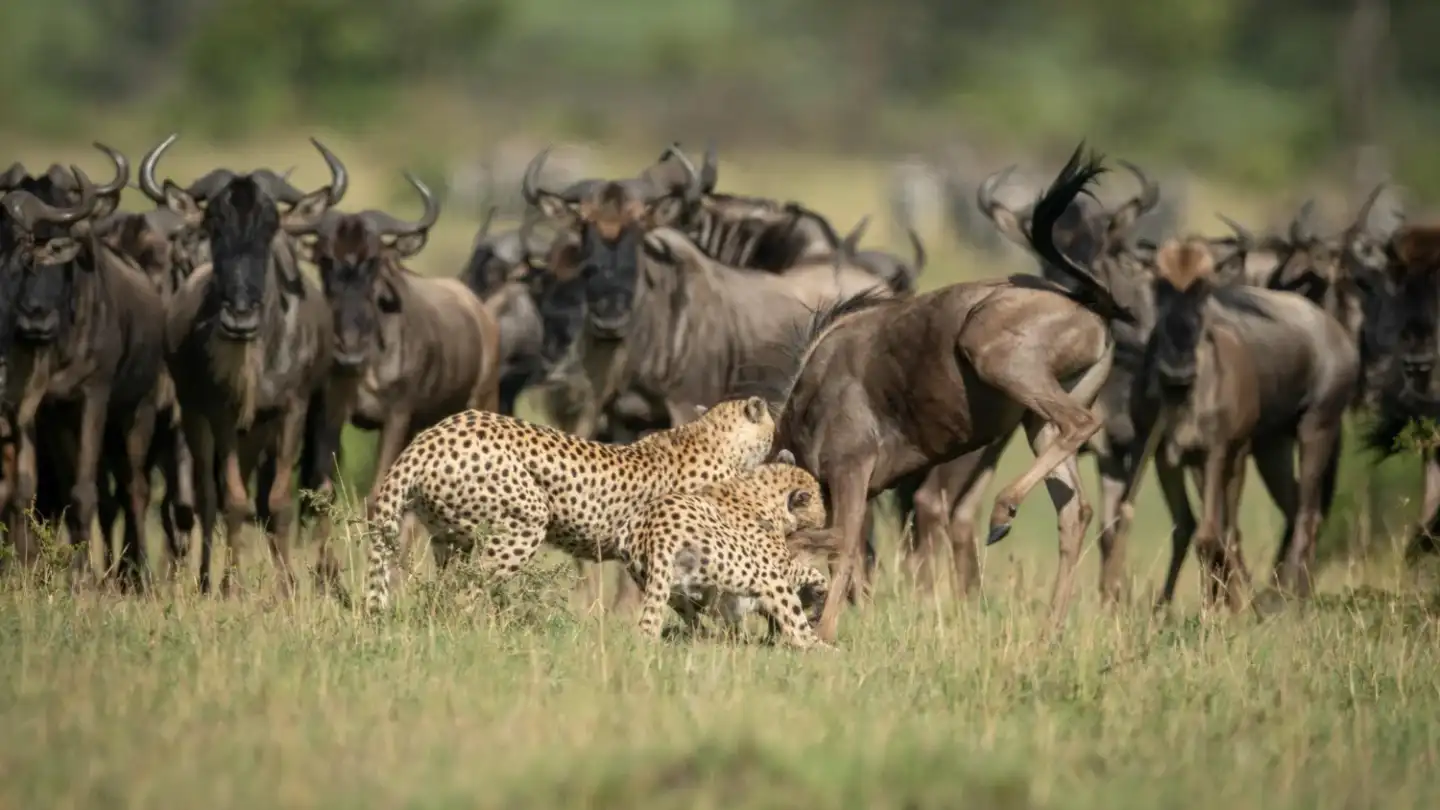
TL;DR: The Great Migration calving season runs from January to March on the short-grass plains of the south-east Serengeti. About 500,000 wildebeest calves are born in two to three weeks in February. Predators follow the herds, so it is one of the best times of year for lions and cheetahs. Book early for January to March 2027, and pair the Serengeti with the Ngorongoro Crater nearby.
What is the Great Migration calving season?
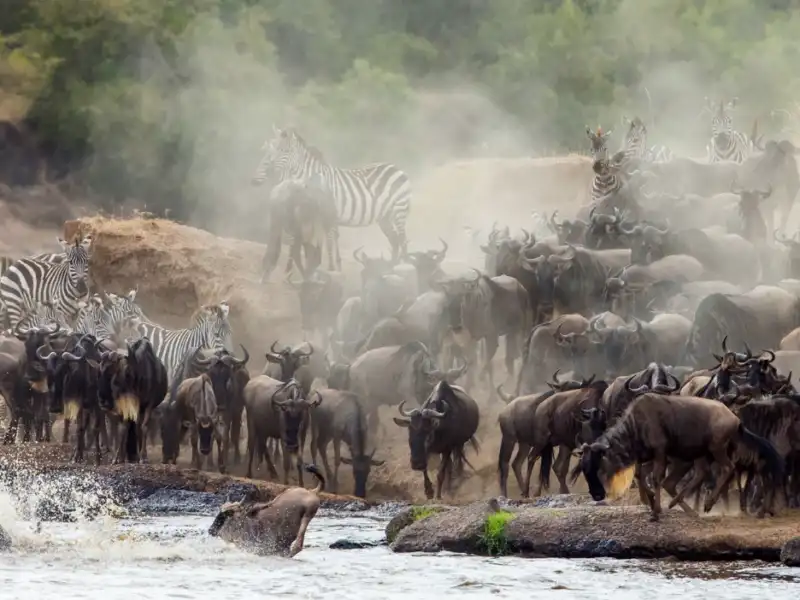
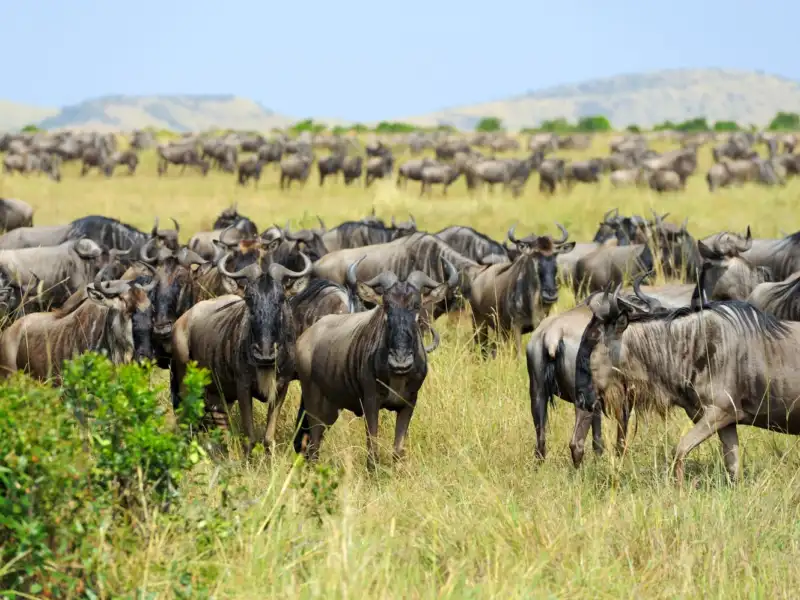
The Great Migration is a yearly circuit of the Serengeti ecosystem by about 1.7 million wildebeest, 260,000 zebras and 470,000 gazelles. In December the herds return to the south-east of the Serengeti. From January to March they stay on the short-grass plains, and that is where the calves are born.
The calving peak is short. About 500,000 calves are born in two to three weeks in February. The grasses of the southern plains are rich, which helps the mothers feed their young in the first weeks of life.
Why go during the Great Migration calving season?
- Huge herds in one area, spread across open plains that are easy to drive.
- Newborn calves taking their first steps among the herds.
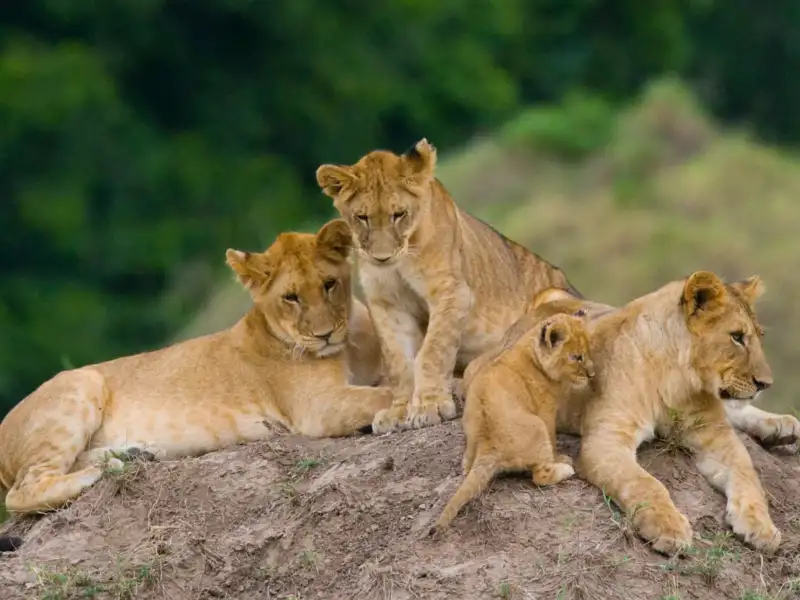
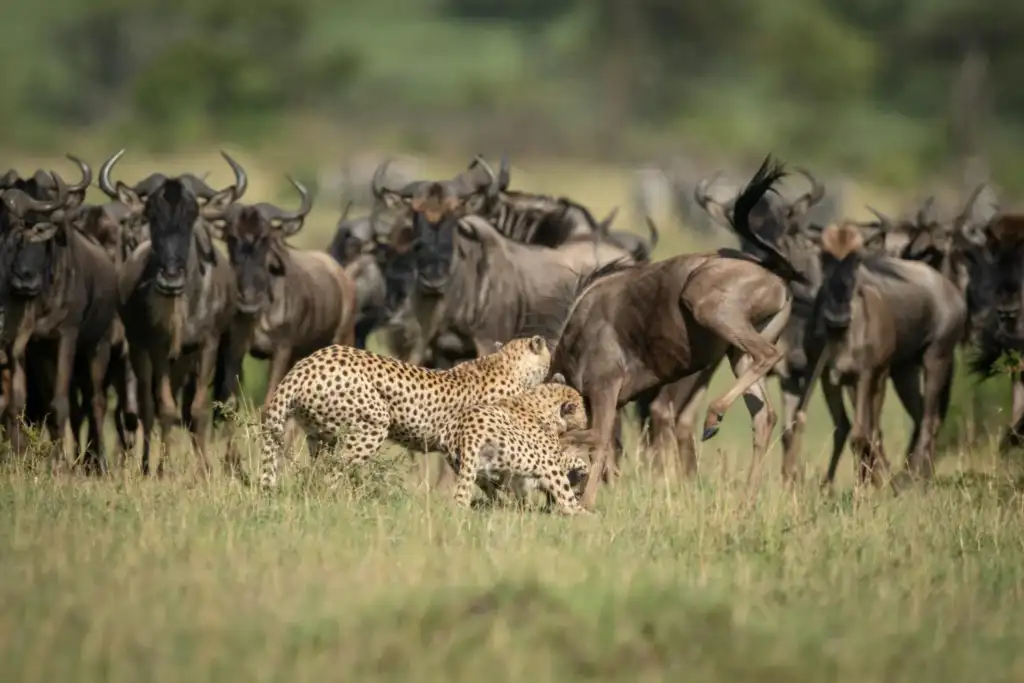
- Predators: lions, cheetahs and hyenas follow the herds, so hunts are often seen.
- Green landscapes after the short rains.
When is the best month for the calving season?
February, for the peak of the births. January and March still put you among the herds on the southern plains. Timing follows the rains, so it shifts a little each year, and nobody can promise a birth on a given day. For the rest of the year, see our month-by-month guide.
Where do the herds go after calving?
As the rains end, around May, the herds move north-west towards the Grumeti River. River crossings of the Grumeti and the Mara begin in July, and many herds reach Kenya’s Masai Mara in late July and August. For the crossings, see our 9-day Serengeti migration and Mara River safari.
Which trip should I choose for the calving season?
- 5-day Serengeti and Ngorongoro safari from Arusha: Tarangire, the Serengeti, the Ngorongoro Crater and Lake Manyara.
- 3-day Serengeti and Ngorongoro Crater safari from Arusha: the short option.
- 5-day Zanzibar to the Great Migration: fly from the island, with two nights in the Serengeti.
Tell us you want the calving season when you send your dates, and we place your Serengeti nights as close to the herds as we can.
Can I add the Ngorongoro Crater?
Yes. The Ngorongoro Crater lies between the Serengeti and Lake Manyara, so it fits on the way in or out. Most of our northern trips include it.
How many days do I need for the Great Migration calving season?
At least two nights in the Serengeti. The southern plains are a long drive from Arusha, so a 3-day trip gives you one full day with the herds. Our 5-day trip gives you more time on the plains and adds the Ngorongoro Crater, Tarangire and Lake Manyara. If you are flying in from Zanzibar, the 5-day trip from the island also has two Serengeti nights.
Frequently asked questions
When is the Great Migration calving season?
January to March, with the peak of births in February.
Where does calving happen?
On the short-grass plains of the south-east Serengeti.
How many calves are born?
About 500,000 in two to three weeks in February.
Is the calving season good for predators?
Yes. Lions, cheetahs and hyenas follow the herds, so it is one of the best times to see hunts.
Can I combine the calving season with Zanzibar?
Yes. Our 5-day trip from Zanzibar to the Great Migration flies you to Arusha and spends two nights in the Serengeti.